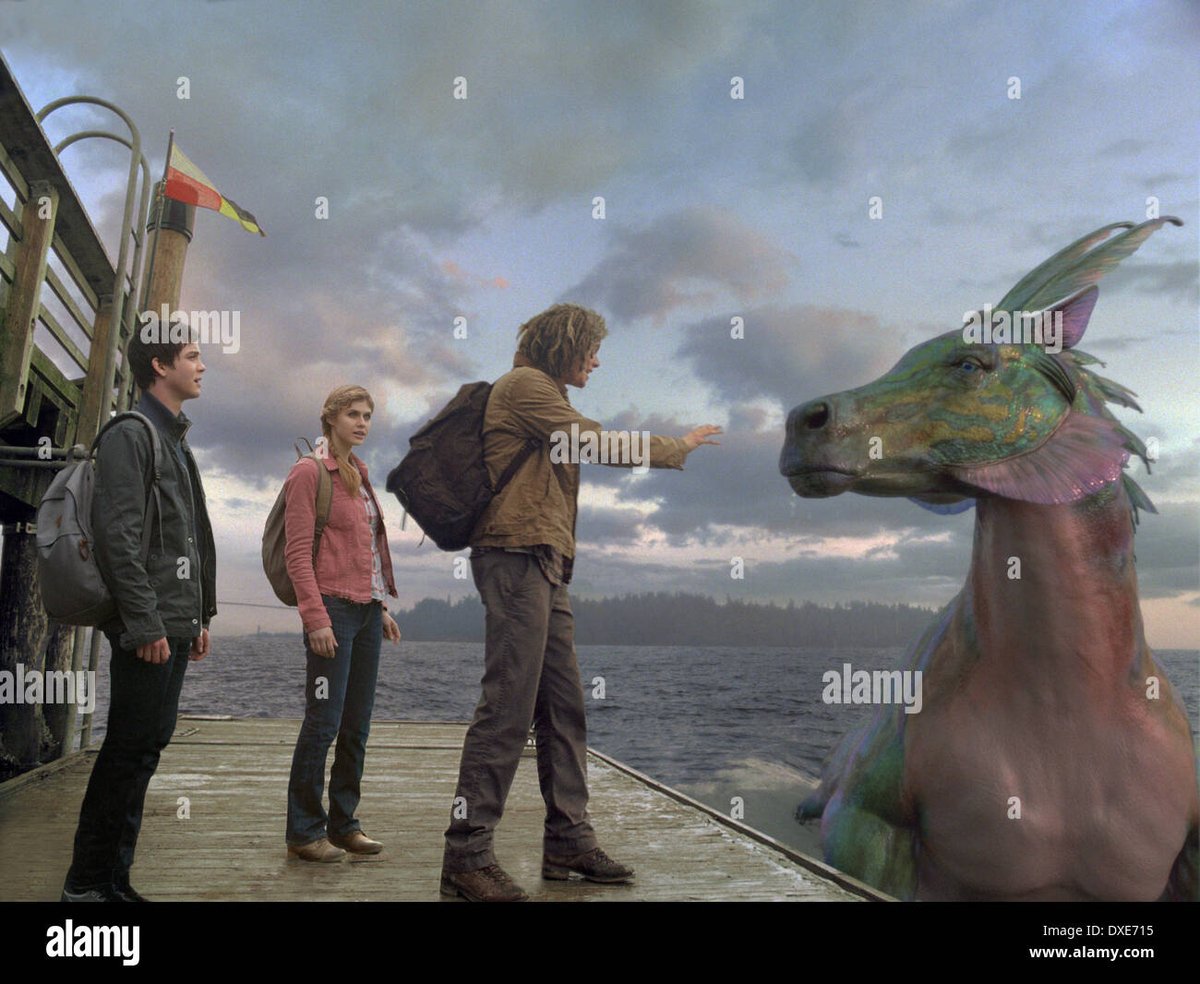
The realm of adapting beloved book series for the screen is fraught with peril. Fan expectations run high, and the tightrope walk between fidelity and cinematic necessity often ends in a stumble. For fans of Rick Riordan’s Percy Jackson & the Olympians series, this journey has been particularly turbulent, culminating in the 2013 film Percy Jackson: Sea of Monsters. As we dissect its strengths and shortcomings, let's dive into Comparing the Cast of Sea of Monsters to Other Percy Jackson Adaptations, examining how its ensemble fared in bringing the demigod world to life, especially when held up against its predecessor and the subsequent Disney+ series.
This wasn't just another sequel; it was a chance for redemption after the first film, The Lightning Thief, faced criticism for its significant deviations from the source material. Sea of Monsters attempted to steer the ship closer to Riordan's narrative, and its casting choices were a crucial part of that endeavor.
At a Glance: Sea of Monsters Casting & Adaptation
- Age Discrepancy Persisted: Main trio (Percy, Annabeth, Clarisse) remained significantly older than their 13-year-old book counterparts.
- Key Characters Introduced Faithfully: Tyson, Clarisse, and Dionysus were included, with Clarisse playing her essential book role.
- Annabeth's Look Corrected: Alexandra Daddario’s Annabeth was finally blonde, a major visual improvement.
- Strong New Talent: Douglas Smith as Tyson and Leven Rambin as Clarisse generally received praise for their portrayals.
- Accurate Visuals: The Bronze Bull, Rainbow the hippocampus, Martha and George, and the Oracle's design were largely faithful.
- Narrative Fidelity: A Mixed Bag: While closer than The Lightning Thief, the film still made drastic plot changes (e.g., Kronos's premature resurrection, omitted key scenes) that impacted character development.
- Lacked Percy's Voice: The film continued to omit Percy's internal thoughts and witty narration, a core part of his character.
Setting the Stage: The Evolving Landscape of Percy Jackson Adaptations
Bringing the magical, mythological world of Percy Jackson to the big screen was always going to be a monumental task. The books are adored for their blend of contemporary teenage struggles with ancient Greek myths, all filtered through Percy's sarcastic, observant lens. After The Lightning Thief sparked widespread debate among fans for its liberties, Sea of Monsters arrived with the weighty expectation of course correction.
The challenge wasn't just about finding actors who looked the part, but who could embody the spirit, the wit, and the deep emotional arcs of characters barely entering their teenage years. For a deep dive into the actors who took on these iconic roles, you can Meet the Sea of Monsters cast and see how they shaped the on-screen versions of these beloved figures.
The Core Trio: Returning to Camp Half-Blood
The familiar faces of Logan Lerman as Percy Jackson, Alexandra Daddario as Annabeth Chase, and Brandon T. Jackson as Grover Underwood returned for Sea of Monsters. Their chemistry, established in the first film, continued to be a foundational element, though persistent issues from the initial adaptation remained.
Percy (Logan Lerman)
Lerman's portrayal of Percy continued to be a bright spot for many. He brought a sense of earnestness and burgeoning heroism to the role, capturing Percy’s protective nature and occasional awkwardness. However, the film version of Percy, already aged up from 12 to 16 in The Lightning Thief, was now around 17 in Sea of Monsters, while the book character was still just 13. This age difference inherently shifted the character's innocence and relatability for younger audiences, and impacted the perceived stakes of his adventures. The movie also continued to lack Percy's internal monologue, that crucial, witty voice that defines the books. Without it, Lerman, despite his best efforts, couldn't fully convey the depth of Percy's internal struggles, fears, or sarcastic observations, which are central to the book's charm.
Annabeth (Alexandra Daddario)
One of the most notable improvements in Sea of Monsters was Annabeth's appearance: Alexandra Daddario finally sported blonde hair, a detail crucial to her character's description as a daughter of Athena. This seemingly small change was a huge win for fans and showed a commitment to accuracy the first film lacked. Daddario continued to portray Annabeth as intelligent and fierce, embodying her strategic thinking. Yet, the film's script often streamlined or omitted scenes vital to her character development. For instance, her initial reluctance and later acceptance of Tyson in the book is a nuanced journey, showing her growth beyond her prejudice against Cyclopes. In the movie, her acceptance is quicker and less fraught, simplifying a complex aspect of her character.
Grover (Brandon T. Jackson)
Brandon T. Jackson's Grover remained a source of comic relief, bringing his unique energy to the satyr sidekick. In Sea of Monsters, Grover’s storyline differs significantly from the book. Instead of actively searching for Pan, he remains at Camp Half-Blood and is later captured by Luke. This alteration, while giving the core trio a direct rescue mission, diverts from Grover's personal quest and impact on the larger mythological world as depicted in the novels. His character, like the others, also appeared older, which, while consistent with the established film continuity, moved him further from his youthful book counterpart.
New Faces, New Hopes: Characters Introduced in Sea of Monsters
Sea of Monsters introduced several key characters crucial to the book's narrative, and their casting was a significant point of comparison.
Tyson (Douglas Smith)
Douglas Smith’s portrayal of Tyson, Percy’s Cyclops half-brother, was a highlight. Smith physically embodied Tyson's imposing size, gentle nature, and childlike wonder. The visual effects for Tyson were largely faithful to the book's description, making him an endearing and accurate adaptation. His interaction with Percy captured the fraternal bond well, even if the movie's script softened Annabeth's initial disdain faster than in the book. Percy's hesitation to call Tyson his brother in the movie was attributed to them having just met, rather than shame from a prior connection, a slight but notable shift in emotional depth.
Clarisse La Rue (Leven Rambin)
Leven Rambin as Clarisse La Rue was a fan-favorite inclusion. Her casting and portrayal were largely lauded for capturing Clarisse's tough, competitive, and somewhat abrasive demeanor. The film even gave her a new introduction scene, establishing her as a formidable force. Crucially, Clarisse was given her rightful place as a central figure in the quest for the Golden Fleece, a role essential to the book's plot. Her character's arc, from rivalry with Percy to begrudging cooperation, was one of the more accurate elements of the film, although the post-quest scene where Percy gives her the fleece was unfortunately skipped.
Dionysus (Stanley Tucci)
Stanley Tucci stepped into the role of Mr. D, Camp Half-Blood's reluctant, wine-god-turned-camp-director. Tucci perfectly captured Dionysus's bored, sarcastic, and slightly resentful attitude, making him one of the most faithful and enjoyable character adaptations. His inclusion was a significant improvement over his omission in the first film, adding a layer of authenticity and humor that fans appreciated.
Thalia Grace (Paloma Kwiatkowski)
Thalia's introduction and backstory, though her "death" cause differed slightly, were largely faithful. Paloma Kwiatkowski's brief appearance at the end of the film as Thalia, resurrected by the Golden Fleece, set up an intriguing future that unfortunately never materialized in a third movie. Annabeth having a piece of Thalia's pine tree was a movie addition, serving as a visual reminder of their shared past.
Other Notable Visuals and Inclusions
The movie also boasted faithful designs for several mythical creatures and elements:
- The formidable Bronze Bull
- Rainbow the hippocampus, Tyson’s loyal friend
- Martha and George, Hermes’ caduceus snakes
- The creepy yet accurate portrayal of the Oracle
- The thrilling sequence with the Graeae and their Taxi of Eternal Torment (though their destination changed from the book).
Riptide's animation was also generally praised, making Percy's signature sword feel powerful and dynamic. However, a small but important detail was changed: Percy states his father gave it to him in the movie, rather than Chiron, as in the books.
Where Sea of Monsters Diverged: The Impact on Character and Plot
While Sea of Monsters made strides in character accuracy, numerous plot changes and omissions inevitably impacted the cast's ability to fully embody their roles and the narrative's overall integrity.
Age and Narrative Voice
As mentioned, the continued aging up of Percy, Annabeth, and Clarisse disconnected them from the relatability of their 13-year-old book counterparts. More profoundly, the film's lack of Percy's internal narration meant that much of the books' humor, character insight, and unique voice were absent. This forced the actors to convey emotion and character traits purely through dialogue and action, often simplifying complex internal struggles.
Missing Characters and Skipped Scenes
- Tantalus: The cruel, eternally hungry camp director, Tantalus, was completely omitted. His absence removed a significant antagonistic figure and a source of unfairness that Percy and his friends had to navigate, affecting the camp's atmosphere and the characters' resilience.
- Circe and the Sirens: Crucially, chapters involving Circe's island and the Siren scene were cut. These were pivotal for Annabeth's character development, revealing her deepest insecurities, flaws, and aspirations. Without them, Daddario's Annabeth, while competent, lacked some of the psychological depth and vulnerability that makes her so compelling in the books.
- Grover's Quest: The movie's decision to have Grover stay at camp and then be kidnapped, rather than actively searching for Pan as in the book, reshaped his agency and purpose.
Altered Dynamics and World Mechanics
- Annabeth and Tyson: While improved, the movie's portrayal of Annabeth's initial reluctance towards Tyson was less pronounced than in the book, streamlining a key aspect of her character growth.
- The Mist: The film misinterpreted the "Mist" as a perfume for appearing human. In the books, it's an automatic, pervasive force that helps mortals rationalize mythical events, a subtle yet crucial difference in the world's magic.
- Hermes Encounter: The cinematic Hermes encounter, where Annabeth actively seeks him at a post office, differs significantly from the book's spontaneous visit by Hermes (disguised as a jogger) at Camp Half-Blood. The items he provides also change, altering the resourceful nature of the demigods' journey.
- Polyphemus' Island: The book's natural, sheep-filled island became an abandoned amusement park in the movie. While visually distinct, this significantly changes the atmosphere and setting of a key confrontation.
Kronos's Premature Role: A Major Departure
Perhaps the most significant and criticized change was the full resurrection and active presence of Kronos in Sea of Monsters. This plot point was reserved for much later books in the original series, fundamentally altering the overarching narrative and the stakes. It created an antagonist who overshadowed Luke, the actual primary antagonist of Sea of Monsters, and unnecessarily rushed the series' grand conflict. This change, more than any other, signaled a lack of understanding of the series' long-game plot, making it difficult for the cast to embody characters within a radically altered mythos.
From Screen to Series: The Evolving Landscape of Percy Jackson Adaptations
The cinematic journey of Percy Jackson, while having some high points in casting, ultimately struggled with fidelity. This led to a hiatus and a renewed effort with the Disney+ series, Percy Jackson and the Olympians. When comparing the cast of Sea of Monsters to other Percy Jackson adaptations, it's impossible not to consider the series.
The Disney+ show, with Rick Riordan directly involved, made a concerted effort to cast age-appropriate actors. Walker Scobell as Percy, Leah Sava Jeffries as Annabeth, and Aryan Simhadri as Grover were cast at the correct ages, allowing for more authentic character growth and a truer reflection of their book counterparts' innocence and vulnerability. The series also embraced the internal monologue, giving Percy his voice back. This shift highlights a major lesson learned from the films: that age accuracy and narrative voice are paramount to capturing the essence of the Percy Jackson books. While the films had some strong individual performances, the series aimed for a more holistic, book-accurate ensemble from the start.
The Lingering Question: Did the Sea of Monsters Cast Capture the Spirit?
Despite a decent budget and some genuinely good casting choices for individual characters (like Tucci's Dionysus, Rambin's Clarisse, and Smith's Tyson), Percy Jackson: Sea of Monsters ultimately failed to evoke the true spirit of the novels. The core trio, while talented, were too old for their roles, and the script's drastic departures, omissions of key character-building scenes (like the Sirens), and the premature introduction of Kronos undermined much of the cast's efforts.
The film felt like a collection of characters going through a series of events, rather than a deep dive into the emotional landscape and witty banter that defines the books. While it was a step up in accuracy compared to The Lightning Thief, it still contained too many significant changes, leading to disappointment for dedicated fans. The cast, despite their best efforts, were often working with a script that stripped away the nuance and intricate plotting that makes Riordan's books so beloved.
Charting the Future: What Fans Truly Seek in a Percy Jackson Cast
The journey of adapting Percy Jackson underscores a vital lesson for filmmakers: authenticity matters. Fans aren't just looking for actors who look like the characters; they're looking for performances that feel like the characters.
- Age-Appropriateness: Maintaining the characters' ages as they grow through the series is crucial for character development and relatability.
- Emotional Depth and Nuance: Capturing not just the heroic actions but also the fears, insecurities, and internal monologues that define these young demigods.
- Fidelity to Key Character Arcs: Ensuring pivotal scenes that shape a character’s personality or relationships (like Annabeth's journey with Tyson or confronting the Sirens) are included.
- Respect for World-Building: Understanding the mechanics of the mythical world, from the "Mist" to the motivations of gods and monsters, directly impacts how characters interact with their environment and each other.
Ultimately, a successful Percy Jackson adaptation relies on more than just star power. It requires a deep respect for the source material, a commitment to character authenticity, and the courage to let the story unfold as Rick Riordan intended, allowing the cast to truly shine within a faithfully rendered world. The efforts in Sea of Monsters, while showing some improvement, serve as a valuable benchmark for the continuing evolution of demigod storytelling on screen.